
Speakers
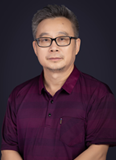
 | Professor Yuanzhu Chen School of Computing, Queen's University, Canada Yuanzhu Chen currently is a Professor at School of Computing, Queen’s University, Canada. Prior to his appointment at Queens in 2021, he was a Professor at Department of Computer Science at Memorial University of Newfoundland, St. John’s, Canada from 2005, and also served as Department Head. He was Deputy Head for Undergraduate Studies in 2012-2015, and Deputy Head for Graduate Studies in 2016 to 2019 at Memorial. He received his Ph.D. from Simon Fraser University in 2004 and B.Sc. from Peking University in 1999. Between 2004 and 2005, he was a post-doctoral researcher at Simon Fraser University. His research interests include computer networking, mobile computing, graph theory, complex networks, Web information retrieval, and evolutionary computation. |
Speech Title: Fading Networks Abstract: The universal presence of networks makes them an important conduit to study interactions in complex natural and artificial systems. While maintaining their integrity is crucial, in many cases, we are also interested in disconnecting them for disease prevention control, failure containment, crime disruption, etc. With an array of methods exploring node importance, localized execution, measurement of fragmentation, the choices we have can be disorienting. In this talk, I will discuss a general framework proposed to investigate strategic choices of nodes to remove from the network, and how distributed information gathering and decision making can help us achieve the balance between efficacy and cost of doing so. The framework was evaluated using computer simulation of network dissolution for the full process of weakening, breaking, and shattering. Measurements of focus include the structural losses such as increased effective diameter, homogenization of node degrees, and Shannon diversity of resultant network fragments. I will also review a few other projects of mine related to computer networking and complex networks. | |
 | Professor Daowen Qiu Sun Yat-sen University, China Professor Daowen Qiu's main research outcomes have been in the following areas. (1) Quantum models of computation. (2) Quantum query algorithms. (3) Quantum cryptograpy and quantum communication. (4) Quantum states distinguishablility and quantum states cloning. (5) Theory of computation based on quantum and lattice-valued logic. (5) The applications of fuzzy and probabilistic automata to discrete event systems, focusing on diagnosability and supervisory control. He and his team have published over 130 papers in peer-review journals, and over 25 conferences papers. |
| Speech Title: Quantum Model Learning Abstract: Learning finite automata (termed as model learning) has become an important field in machine learning and has been useful realistic applications. Quantum finite automata (QFA) are simple models of quantum computers with finite memory. Due to their simplicity, QFA have well physical realizability, but one-way QFA still have essential advantages over classical finite automata with regard to state complexity. As a different problem in quantum learning theory and quantum machine learning, in this talk, we introduce learning QFA (both MO-1QFA and MM-1QFA are simple but important QFA) with queries (naturally it is termed as quantum model learning), including: (1) A learning algorithm for measure-once one-way QFA (MO-1QFA) with query complexity of polynomial time; (2) A learning algorithm for measure-many one-way QFA (MM-1QFA) with query complexity of polynomial-time, as well. | |
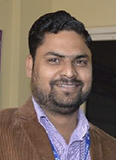 | Professor Sandeep Saxena Department of Information Technology, Galgotias College of Engineering and Technology, Greater Noida, Inda. Prof. (Dr.) Sandeep Saxena, working as a Professor in the Department of Information Technology, Galgotias College of Engineering and Technology, Greater Noida, INDA. He has received his Ph.D. degree in CSE from NIT Durgapur, West Bengal. He has received his MS degree in Information Security from the Indian Institute of Information Technology, Prayagraj. He has received his B.Tech degree in CSE from U.P.T.U. Lucknow. He has more than 13 Years of Teaching and Research Experience. His areas of interest and research include Security and Privacy in Blockchain Technology and Cloud Computing, Architecture Design for Cloud Computing, Access control techniques in Cloud Computing and Blockchain Technology. He has performed the role of a key member in more than 10 International Conferences as Keynote Speaker/Organizing Secretary/ Organizing Chair/ Session Chair. He has written 3 technical books for UP Technical University, Lucknow, and published multiple research papers in reputed international journals and conferences. He has published more than 30 research papers in reputed peer-reviewed journals/conferences indexed by (Scopus, SCIE, Google Scholars, DBLP) with high impact factors, more than 10 Patents published, and 2 Patents are granted. He is participating in multiple professional societies like IEEE (Senior Member), IAASSE (Senior Member), Life Time Member in CSI, and Life Time Member in CRSI. |
| Speech Title: Permissioned Blockchain Abstract: A blockchain is an immutable transaction ledger, maintained within a distributed network of peer nodes. These nodes each maintain a copy of the ledger by applying transactions that have been validated by a consensus protocol, grouped into blocks that include a hash that bind each block to the preceding block. A permissioned blockchain is a distributed ledger that is not publicly accessible. It can only be accessed by users with permissions. The users can only perform specific actions granted to them by the ledger administrators and are required to identify themselves through certificates or other digital means. | |
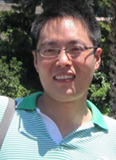 | Professor Xiaofeng Ding Huazhong University of Science and Technology, China Prof. Xiaofeng Ding, research interests mainly include big data management, cloud computing, data privacy protection methods and data query processing technologies.As a postdoctoral researcher, he was engaged in research on big data management, privacy protection, query processing and data-intensive service technologies at the National University of Singapore and the University of South Australia in 2010 and 2013. By far, he has more than 40 academic papers being published or included in well-known academic journals and conferences in China and abroad, such as IEEE Transactions on Knowledge and Data Engineering, IEEE Transactions on Dependable and Secure Computing, International Conference on Very Large Databases (VLDB), IEEE International Conference on Data Engineering (ICDE), IEEE International Conference on Distributed Computing Systems (ICDCS), Information Sciences, Knowledge Based Systems, Chinese Journal of Computers, Journal of Software, International Journal of Research and Practice in Information Technology, Journal of Computing and Informatics. |
Speech Title: Privacy Preserving Problems in Deep Learning Abstract: Deep learning is increasingly popular, partly due to its widespread application potential, such as in civilian, government and military domains. Given the exacting computational requirements, cloud computing has been utilized to host user data and model. However, such an approach has potential privacy implications. Therefore, we introduce a method to protect user’s privacy in the inference phase of deep learning workflow. Specifically, we use an intermediate layer to separate the entire neural network into two parts, which are respectively deployed on the user device and the cloud server. | |